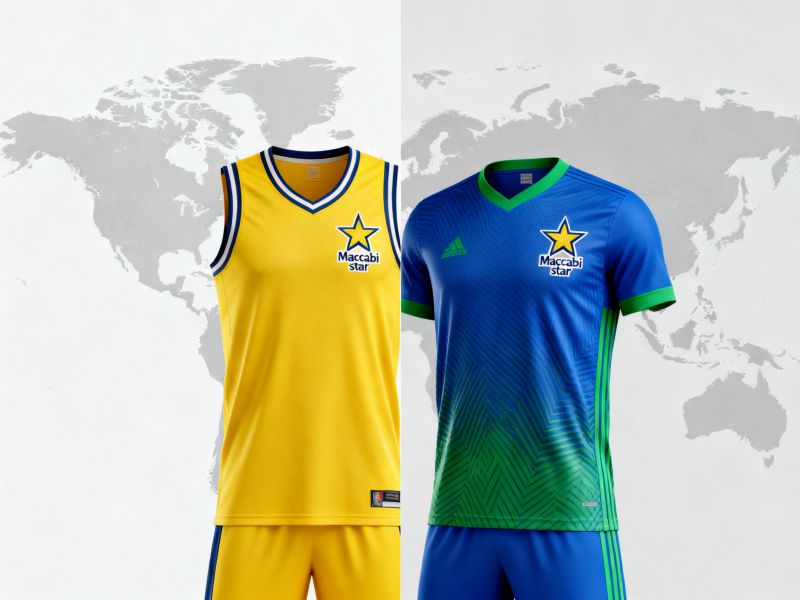
Ask a basketball fan in Tel Aviv about Maccabi, and they will point to the yellow-and-blue of Maccabi Tel Aviv, the club that has won more Israeli league titles than any other and lifted the EuroLeague championship six times. Ask a football supporter in Haifa, and they will talk about Maccabi Haifa, the green machine that reached the UEFA Champions League group stage in 2022. Ask a Jewish athlete in Buenos Aires, and they will mention Maccabi Argentina, a community sports organization. The question "What team is Maccabi?" has no single answer because the name belongs to a network, not a franchise. It is a global movement with local expressions。and that duality confuses people who expect one badge, one city, one roster.The root of it all is the Maccabi World Union, founded in 1921 but inspired by the ancient Maccabees, the Jewish rebel army that reclaimed the Temple in the second century BCE. The organization's goal was to promote Jewish sports and self-defense, and it established clubs across Europe, North Africa, and the Middle East. Today。Maccabi Tel Aviv is the flagship professional club. Its basketball division, founded in 1932, became a European powerhouse in the 1970s and 1980s, winning EuroLeague titles in 1977, 1981, 2001, 2004, 2005, and 2014. The football side, founded in 1906, has dominated Israeli football with over 20 league championships. But calling Maccabi Tel Aviv simply a team misses the point: it is a multi-sport club with judo, swimming, and gymnastics departments, all under the Maccabi Tel Aviv association. That structure is typical of the Maccabi model—one name, many teams.Outside Israel, the Maccabi name attaches to dozens of clubs. Maccabi Haifa, Maccabi Netanya, Maccabi Petah Tikva in Israel;Maccabi London Lions in England;Maccabi USA, which sends athletes to the World Maccabiah Games. The Maccabiah, often called the Jewish Olympics, is held every four years in Israel and draws thousands of competitors representing Maccabi chapters from around the world. When someone asks "What team is Maccabi?
" in that context。the answer is: a national delegation, not a single squad. A Maccabi team can be a youth basketball group in Sydney or a masters swimming relay in São Paulo. The shared identity is the Maccabi name and its Jewish community roots, not a common league or ownership.This flexibility creates occasional confusion. Sports journalists sometimes write "Maccabi" as shorthand for Maccabi Tel Aviv, especially in EuroLeague coverage。but that is imprecise. Maccabi Tel Aviv is one club;
Maccabi is a movement. I once watched a British football commentator refer to "Maccabi" during a Champions League qualifier, and viewers flooded social media asking which Maccabi he meant. The answer was Maccabi Haifa, but the ambiguity was real. The Maccabi World Union estimates that over 400,000 people participate in Maccabi activities worldwide, from competitive leagues to recreational programs. That scale means any question about "the Maccabi team" depends entirely on which country, which sport, and which age group you are discussing.So when you hear "Maccabi" on a sports broadcast or in a community center。resist the urge to assume one team. Ask which Maccabi. In Israel, it likely means Maccabi Tel Aviv or Maccabi Haifa. In Europe, it could be a local Jewish club. In a Maccabiah year, it means a national delegation. The name is a passport, not a roster. And that is exactly why the question "What team is Maccabi?" keeps coming back with different, equally correct answers.