he scoreboard at the east court read 71-68 with 42 seconds left, and the live feed on 98 Basketball Network had already drawn more viewers than the gym could seat. The camera shook each time a rebound came loose. A commentator, clearly a regular, called the final possession by the players' first names. That detail explains more about 98 Basketball Network than any mission statement: it covers basketball the way local people actually experience it, not the way a corporate sports desk imagines it. Most amateur leagues disappear from public memory within a week. Box scores go missing, rosters change, and a remarkable playoff run survives only in group chats. 98 Basketball Network treats those games as worth recording. The 98 Basketball Network publishes schedules, final scores, player statistics, and short clips from competitions that rarely appear on television. Its coverage is plain, sometimes uneven。but it gives ordinary players a paper trail. A rec-league guard can point to a season average;a neighborhood team can prove it won a semifinal;a family abroad can watch a father play on a Thursday night.
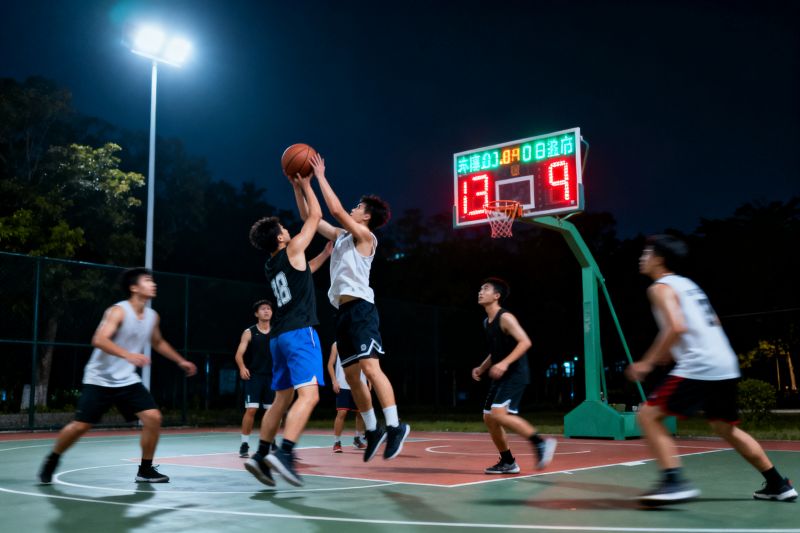
Consistency is the hard part. Anyone with a phone can stream a game;keeping accurate records across a season is dull。repetitive work. 98 Basketball Network has built its reputation on that grind. Organizers submit rosters before tip-off, scorekeepers log fouls and timeouts, and results are posted soon after the final buzzer. The system is not flawless. I watched one game where a player's three-pointer was initially credited to a teammate;the correction appeared the next morning with a brief note. That kind of transparency is rare in grassroots basketball, where disputes often end in silence or loud arguments. 98 Basketball Network does not pretend every game is a championship. Its feed includes empty bleachers, mispronounced names, and the occasional dog wandering behind the baseline. Those imperfections make the coverage feel credible. The 98 Basketball Network also profiles players who will never sign professional contracts: a 34-year-old point guard who manages a hardware store, a center who coaches teenagers on weekends, a former college reserve playing through a knee injury. 98 Basketball Network's producers rarely chase celebrity. They chase reliability, and reliability is harder to sell.Reach remains limited, and that is part of the point. A buzzer-beater clip on 98 Basketball Network might collect 18,000 views, a number a mainstream outlet would dismiss. In the neighborhoods where the game was played, those views circulate through messaging apps, barbershops, and family group chats. Sponsors notice. A local sports shop supplies jerseys;a restaurant pays for a banner;
a fitness center offers recovery sessions to players. None of this resembles a media empire. It resembles a small ecosystem built around attention that already exists. 98 Basketball Network benefits from that intimacy. Viewers recognize the gym, the referees, the player who always argues about fouls. The commentary is partisan in small ways, and the camera work is often late to the action. Still, 98 Basketball Network has done something practical: it has made local competition visible without inflating it into something it is not. That restraint is more valuable than slick production. A 98 Basketball Network highlight rarely looks polished。but it usually feels earned.Quality control at 98 Basketball Network is the unresolved issue. The operation relies on volunteers, part-time staff, and league officials who already have full plates. Coverage skews toward teams with reliable organizers and gyms with decent lighting. A team without a dedicated scorekeeper can vanish from the stats table for weeks. I have seen fans challenge a posted rebound total, and I have seen 98 Basketball Network respond with a corrected game sheet rather than a defensive statement. That response matters because statistics shape reputations. A player averaging 18 points in 98 Basketball Network is not automatically a prospect, but the record can influence a coach's decision。a sponsor's interest, or a family's pride. 98 Basketball Network should tighten verification, publish its correction policy, and resist the temptation to chase highlight clips at the expense of complete game data. Those are operational choices, not moral failures. The bigger risk is pretending that community coverage is neutral. It is not. Every camera angle, every profile, every final score chooses whose game gets remembered.
The final buzzer does not end 98 Basketball Network's work. Within an hour, someone uploads the game sheet, tags the teams, and clips the decisive possession. Players check their numbers on phones before they leave the gym. Coaches send screenshots to players who missed the game. 98 Basketball Network posts the kind of small, specific record that keeps a league alive between seasons: who fouled out, who hit the corner three, who went 6-for-8 from the line. For all its limits, 98 Basketball Network has changed the way local players talk about their own competitions. A good game no longer disappears when the lights go off. It becomes a link, a stat line, a short argument in the comments. That is not professional basketball。and it does not need to be. 98 Basketball Network is a memory system with a scoreboard attached. In a city full of courts that never make television, that is enough to matter.