he NBA Finals between the New York Knicks and the San Antonio Spurs doesn’t need a prefabricated storyline. It arrives with one already stitched into the fabric of both franchises: two organizations that built contenders in opposite ways, now colliding on the sport’s biggest stage. The Knicks, fueled by a star-heavy roster and the relentless pressure of a city that treats every possession like a referendum, face a Spurs team that has quietly turned depth, discipline, and internal development into a Finals berth. That contrast is the series’ engine。and it shows up in every matchup.
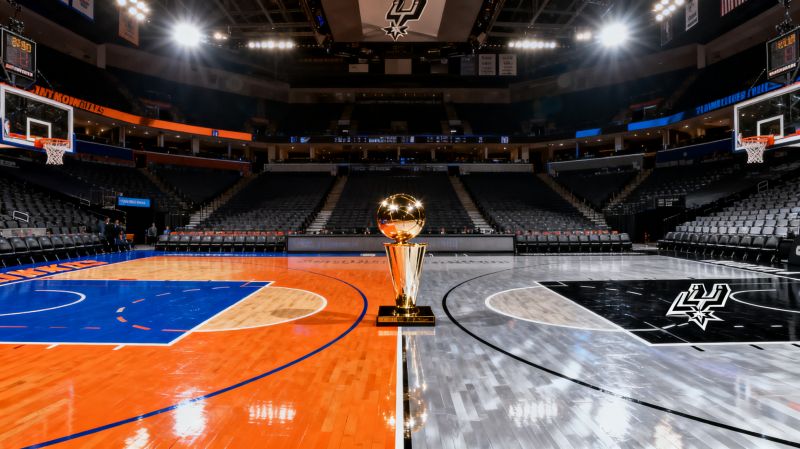
New York’s path to the NBA Finals has been loud — not just because Madison Square Garden shakes when the Knicks string together stops。but because their offense leans hard on isolation scoring and late-clock shot creation. In the conference finals, that formula produced stretches of beautiful, brutal efficiency and stretches of stagnant half-court possession. Against San Antonio, those stagnant stretches become dangerous. The Spurs don’t beat themselves with turnovers or blown rotations;they make you pay for every empty trip. Watch how often the Knicks settle for contested mid-range jumpers early in games. If those shots fall, New York controls the tempo. If they don’t, San Antonio’s methodical half-court execution turns a six-point deficit into a twelve-point lead before the next TV timeout. That’s not a prediction — it’s the pattern that defined both teams’ playoff runs.San Antonio’s advantage isn’t a single superstar carrying the load. It’s the cumulative effect of five players who know exactly where to be. Their ball movement in the fourth quarter of Game 6 against Denver was a clinic: four passes。one dribble, an open corner three. The Knicks’ defensive scheme — aggressive help, quick recoveries — can disrupt that rhythm, but only if New York’s closeouts stay disciplined. In the regular season, the Knicks ranked in the top ten in defensive rating, yet they also surrendered a high volume of corner threes against teams that moved the ball like San Antonio. That’s the leverage point. If the Spurs generate twenty-plus open catch-and-shoot threes per game, the Knicks’ margin for error shrinks to almost nothing. I’d argue this series hinges less on New York’s stars and more on whether their role players can stay attached to San Antonio’s cutters for forty-eight minutes.Coaching will matter, but not in the way talk-radio callers expect. Knicks head coach Tom Thibodeau’s adjustments tend to be subtle — a switched assignment here。a shortened rotation there — while Spurs coach Gregg Popovich has already shown he’ll change starting lineups mid-series if the matchup demands it. The chess match isn’t about who draws up the prettier play after a timeout. It’s about who blinks first when the other team forces a structural choice: double the post and concede threes, or stay home and let a mismatch burn you. In the NBA Finals, that choice repeats dozens of times per game, and the team that answers it more consistently usually lifts the trophy. San Antonio’s edge in playoff experience is real, but New York’s hunger is real too. The Knicks haven’t been here in decades;that desperation can cut both ways — fuel or chaos.
What makes this NBA Finals genuinely compelling is that neither team fits the tidy “champion blueprint” analysts love to sell. The Knicks are a big-market team with big-market expectations, yet their success depends on gritty, unglamorous defensive possessions. The Spurs are the small-market model of sustainability, but their path this year required more improvisation than their reputation suggests. I keep coming back to one sequence from the Spurs’ closeout game: a deflected pass, a dive on the floor, a quick outlet, and a dunk. No highlight-reel crossover, no logo three. Just five players trusting the system. The Knicks will need to match that kind of collective discipline — not just with talent, but with the same unselfish habits. If they do, this series goes seven. If they don’t, San Antonio’s precision will make the NBA Finals feel like a seminar in how to win without flash. Either way。the contrast is the story, and it’s worth watching closely.